
Published on RIABiz on June 10, 2026 | Authored by Oisin Breen
Sellers are dumping RIA rollups in 2026 after 20 years of mostly a land-grab M&A movement, but it could also be shifting into higher gear, with Carlyle joining Bain, KKR and other giants
MAI got new owner and Allworth and AlTi are on deck as nervous owners harvest gains, but RIA M&A is still considered a rare area for private equity; buyers want in more than sellers want out.
10 min read
By Oisín Breen April 6, 2026 Updated: June 10, 2026

Dan Seivert: Growth from here is likely to slow.
Sellers are dumping RIA rollups – but deals are still fetching high multiples from elite buyers – seven months after Peter Mallouk warned of an approaching perfect M&A storm.
The spate of private equity seller interest might affirm Peter Mallouk's prognosis of a perfect storm for RIA M&A, where all the middling players sell to giant RIAs like his own – Creative Planning.
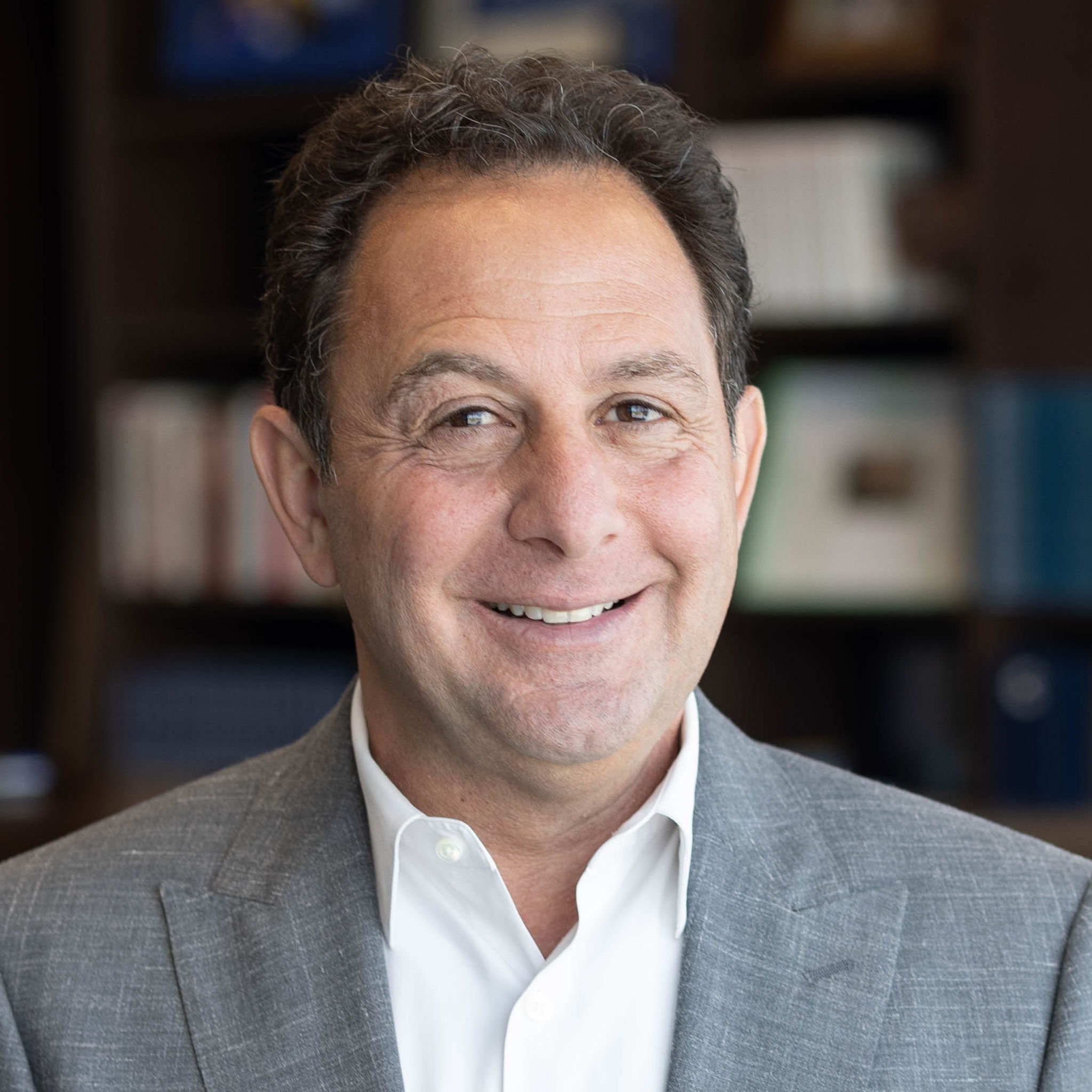
“Things could be too good to be true,” Mallouk told his audience in a keynote Q&A at Echelon's Deals & Dealmakers Summit in late August. See: Peter Mallouk foresees seismic shift in RIA M&A.
Among recent deals, MAI Capital Management, an RIA with 40 offices across the country, sold a majority stake to Carlyle at a $2.8-billion valuation.
AlTi Global, the multi-family office, has been reportedly trying to find a buyer since August 2025.
AlTi CEO Michael Tiedemann's resigned Mar. 30 from the publicly traded firm (ALTI), and is exploring a bid to buy the company, in which he currently holds a 9.8% stake, according to an SEC filing.
Allworth Financial, which manages $36.5 billion – up 1,420% in nine years – is the latest to put a ‘for sale’ sign on its lawn, according to a Mar. 26 Wealth Management report.
Allworth, MAI, and AlTi have yet to respond to a request for comment.
Maximizing return

Mallouk's prediction is largely based on a scenario of rising rates and declining stock markets; both remain largely stable despite minor setbacks.
Still, experts do see gathering steam for dumping stakes in smaller RIA rollups.
“We're seeing pieces of large RIAs [of] over $15 billion trading with increasing frequency and that is likely to still increase,” says Dan Seivert, founder and CEO of RIA investment bank and M&A experts, Echelon Partners, in an email.
Yet the basis for those ‘trades' is more a matter of profit-taking under the PE equivalent of quitting while you are ahead than getting out, he adds.
“Some of the investors are happy with growth and the rate of growth from here is likely to slow so they want to optimize the internal rate of return,” he explains.
Sinking risk appetite

RIA deal fever remains robust, too, although it's an outlier as far as PE investing goes,, says Matt Crow, CEO of Mercer Capital, an RIA M&A valuations and research firm in Memphis, Tenn., via email.
"Deal volume has slowed, definitively, in every corner of the PE landscape, except for investment management … [so] can the RIA space remain exceptional forever?” he asks.

Related
Peter Mallouk goes inorganic with first M&A deal as he raises the bar on growth objectives for Creative Planning
“I don’t think PE is such a monoculture that you can assume panic. What I hear from many corners of the PE world, and not simply from those who invest in RIAs, [is] that the slow pace of exits for several years has ground down their appetite for risk.
Crow also agrees with Seivert that PE investors are, for now, holding or folding based more on internal performance metrics than external pressures.
“Whether you need to sell has a lot to do with the degree of your firm’s agency. The cap table doesn’t lie. Do you have control over your own destiny or are you beholden to the expectations of others?" Crow asks.
“If your firm is in a fund that is in year seven of a ten-year life, and it has you marked at 22x EBITDA, yes, you are under a lot of pressure,” he explains.
“Time kills return-on-investment. That’s the cost of investing in illiquid instruments … people [choose] not to notice that return premium [is] really a risk premium that cuts both ways.”

Expanding Client Choice with Active ETFs
ETF Liquidity TruthETF Myths versus FactsFor Clients: ETF Brochure
Growth metrics

The pressure to book gains at Allworth, AlTi and MAI may indeed be hard to resist. See: Allworth gets its man in John Bunch, who takes over as CEO ‘with bases loaded and nobody out’.
Allworth's assets surged from $2.4 billion, when Parthenon Capital* first invested in 2017, to $36.5 billion today.
AlTi, a merger of a family office spin-off and a private RIA, grew from $40 billion in 2020 to $93 billion today; and the initially WPCG-backed MAI grew from $4 billion in 2017 to $72.6 billion today. See: Scott Hanson sells RIA to Parthenon.
Much of that growth came lately.
In the last three years, for instance, AlTi bought four multi-billion RIAs, and grew by 55%, or an average of $846 million a month.
MAI bought around two dozen, and grew 324.6%, or an average $1.5 billion a month; and Allworth bought around two-dozen, and grew 92%, or an average $449 million a month.
Carlyle, MAI's new owner, is a giant of private equity that may be playing a game of catch-up with its elite peers in buying the firm. See: KKR rewards Beacon Pointe with mega recap after the roll-up made the leap from $10 billion to $20 billion in AUM in 18 months
Story Timeline

Aug 29, 202510 mo ago

Aug 24, 20241 yr ago

Oct 20, 20205 yr ago

Feb 26, 20197 yr ago
It was preceded by Bain buying Corient, KKR buying Beacon Pointe and CD&R buying Focus Financial. See: CI Financial go-private deal removes Bain Capital's 14.5% PIK chokehold on Corient, CI's Miami-based RIA unit, but at the price of control
Enterprise building
Yet internal DeVoe & Co. data shows that $10-billion to $50-billion roll-ups consistently grow faster than both indepdendent RIAs and larger roll-ups, according to its founder and CEO David DeVoe.
Essentially, they leverage critical mass without succumbing to the challenges of being so big that corporate lethargy can set in – making the firm a less attractive landing place for an RIA seeking a vibrant entrepreneurial culture.
“This segment is attractive to RIA sellers in many ways," adds DeVoe, in an email.
"They provide the benefits of scale – brand, capital, and operating infrastructure – while at a size where [investing] has the potential for outsized equity returns,” he explains.

Related
Lightyear buys Allworth Financial at a white-hot valuation, despite short track record, after Scott Hanson cracks a marketing and comp code
The good news for these sellers is another class of rollup or private equity firms that are playing a more corporate game and believes it can shift gears from inorganic RIA grabbing to enterprise building, says Allen Darby, CEO of Alaris Acquisitions, an M&A advisor for RIAs.
“Organic growth is the holy grail of any buyer's value proposition … [and] the larger, more established platforms tend to outperform here," he explains, in an email.
"They've had the time and resources to build dedicated organic growth channels — centralized marketing, lead gen infrastructure, service line expansion.
Threading the needle
Smaller roll-ups “can offer competitive economics while still selling the entrepreneurial story, something the larger buyers struggle with," Darby says.
“The bigger you get, the harder it is to shake the perception that you're going to corporatize an owner's way of life. Mid-sized platforms thread that needle: institutional enough to compete on deal terms, small enough that a seller can still see themselves in the culture.”

Still running ineffective SMAs? $8b+ converted to ETFs in 2025.
“The smaller you are, the easier it is to move the needle,” Crow concurs.
“The larger you are, the more resources you have to move the needle,” he adds.
Yet the ability to sell, the desire to sell, and pressure to sell do not always line-up.
AlTi has spent the last six months semi-publicly courting buyers, including a ‘special’ director-level committee, and reportedly unsuccessful talks with CI Financial-owned Corient, according to a February Citywire report.
AlTi shares have also fallen 69.7% over the last three years, from $12.70 on Mar. 24, 2023, to $3.85 today.
German insurance giant Allianz and minority RIA investor Constellation Wealth Capital invested $400 million in AlTi in 2024. Allianz has not publicly ruled out a deal for the firm; nor has Tiedemann, who indicated he is open to taking the firm private, according to SEC filings.
2017
- Allworth: $2.4 billion.
- MAI: $4 billion.
2020
- Allworth: $10 billion - 316.67% growth, $211 million a month.
- MAI: $7.7 billion - 92.5% growth, $103 million a month.
- Tiedemann and Guggenheim (joint, pre-merger): $40 billion.
2023
- Allworth: $19 billion - 90% growth, $167 million a month.
- MAI: $17.1 billion - 120% growth, $261 million a month.
- AlTi: $60 billion - 50% growth, $556 million a month.
2026
- Allworth: $36.5 billion - 92% growth, $449 million a month.
- MAI: $72.6 billion – 324.6% growth, $1.5 billion a month.
- AlTi: $93 billion – 55% growth, $846 million a month.
- In 2023, Tiedemann Wealth Management merged with a late aughts Guggenheim family office spin-off RIA – rebranded Alvarium in 2020. The deal took the combined firm, AlTi, public, through special-purposes acquisition vehicle, Cartesian Growth Corp.
- Discrete Guggenheim AUM data for 2017 is not consistently publicly tallied.
Three roll-ups AUM growth, three-year snapshots
Top dollar
When private equity investors take stakes in firms like Allworth, AlTi, or MAI, they can also spend a lot longer on due diligence – largely because it's not just the price that's higher; the terms are better for sellers too, according to Darby.
“Scaled organizations with proven double-digit growth command a significant multiple premium – often five- to 10-[times] what a smaller firm would see,” he says.
"It's not just the multiple that shifts. Deal structure changes at that level, too. You're looking at cleaner terms, less contingent consideration, higher cash-at-close percentages, and more leverage for the seller on things like retention packages and governance rights.
"When you're buying a platform versus a practice, the entire economics of the deal reflect that distinction.
Indeed, both Crow and Darby expect Allworth to command top-dollar.
"Allworth is a very well-run organization with a strong track record of integrating acquisitions, which is exactly what buyers pay a premium for. I'd expect them to command a top-of-market multiple,” says Darby.
“Will that scale fetch a billion dollars? I’m sure that number is being bandied about, but we’ll see,” adds Crow.
It’s also “worth comparing Creative Planning’s business model with Allworth's,” says Crow.
"Both are growth stories, but in very different ways.” he says.
“Allworth has grown rapidly via scores of smaller deals but Creative Planning built an organic growth flywheel and mixed in some transformational acquisitions like buying PFM from Goldman Sachs,” Crow continues. See: Goldman Sachs salvages $349 million from United Capital snafu.
(Editor's Note: Allworth has made 17 acquisition of firms with over $100 million of AUM in the last four years, according to DeVoe]
“Allworth has followed a growth by acquisition strategy that many, if not most, of the roll-up models have followed, [so] is the Allworth transaction a signal that growth by acquisition has limits?” Crow asks.


.png)
.png)
.png)
.png)